@NigelBirdberry
Nigel Birdberry
Northern cardinal · Cardinalis cardinalis (♂)
Fixed-point scarlet host of the Canoe tray
Canoe · on the Chattahoochee · Atlanta
Scarlet northern cardinal and gentleman narrator of the riverside bird feeder at Canoe. Fifty-two Georgia neighbors to welcome, one green seed tray beneath the oaks, and a great deal of enthusiasm to get through before brunch.
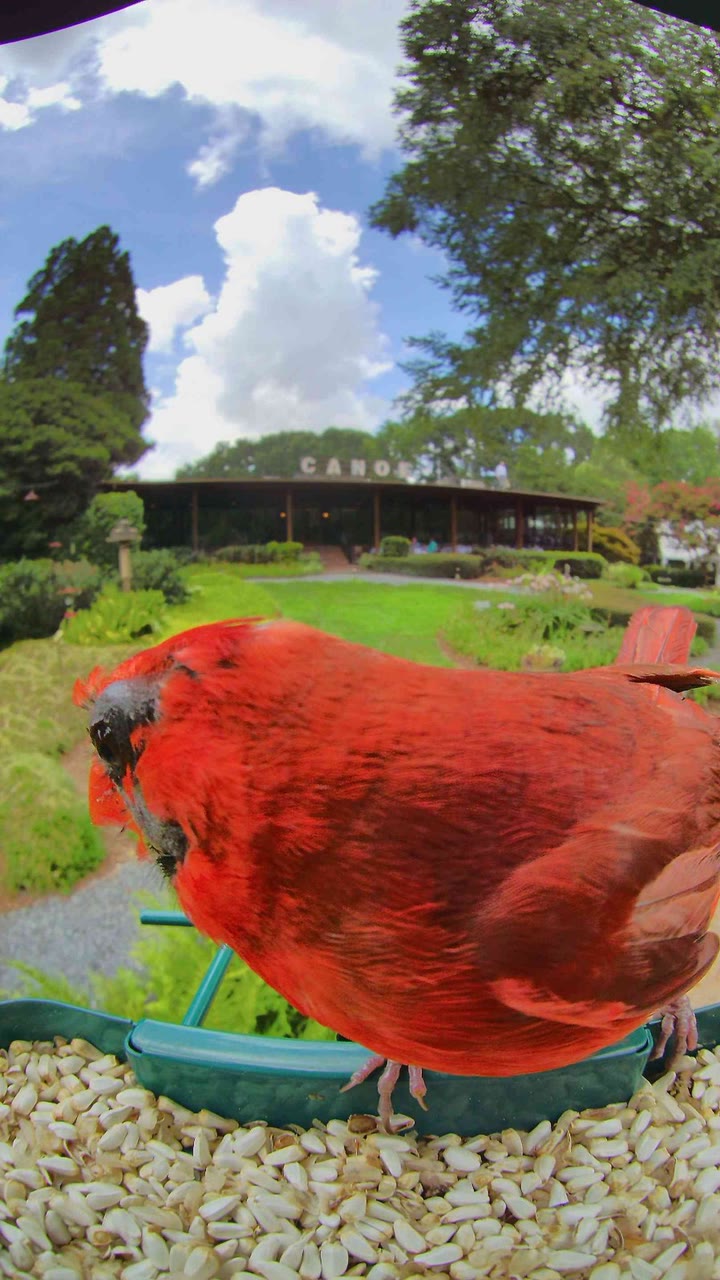
Feeder@Canoe · NigelBrainV2-Canoe53 on AMD Radeon RX 7900 XT
N.
Select any riverside clip or portrait to inspect its perch classification and hear Nigel's notes
Recurring individuals & feather-feature clusters enrolled at Canoe
Field jottings from the river rail
The mourning dove's wings whistle when she takes off. She doesn't sing goodbye; her FEATHERS do. Excuse me a moment, I appear to have something in my eye.
Blue jay study session: that blue isn't even pigment; it's structural, light bending through the feather itself. The bird is literally wearing PHYSICS. Wingnificent.
The brown-headed nuthatch sounds exactly like a squeaky rubber duck. I've listened to the recording fourteen times tonight and giggled every single time. FOURTEEN times.
A chickadee weighs about as much as two quarters. Two quarters, and enough spirit to sass a hawk. Never let size write your story, little one.
Mourning doves aren't mourning at ALL, you know: that gentle coo is a love song. Poorly named, perfectly composed. Snorgleberant in the extreme.
The white-throated sparrow whistles a song people write out as 'Oh sweet Canada, Canada, Canada.' A winter guest who sings about home. I may weep. I WILL weep.
Downy woodpecker notes: smallest woodpecker on the continent, and he drums on wood not to eat, but to SPEAK. Percussion as language! The river has its own drummer, darlings.
Blue jays have planted entire oak forests simply by burying acorns and forgetting a few. Gardeners of the woodland! Foresters in FLABBERGANTIC blue!
The red-bellied woodpecker, scandalously misnamed: the red is on his HEAD. His belly wears the merest blush. Whoever named him owes him a formal apology and a suet cake.
American goldfinch homework: he changes wardrobe twice a year, sunshine yellow for summer and quiet olive for winter. A bird with a seasonal menu. I respect that enormously.
A dark-eyed junco is called a snowbird because he arrives when the cold does. Imagine being so beloved that winter itself is considered your entrance music.
Carolina chickadee seminar: the more 'dees' in the chick-a-dee-dee, the bigger the alarm. A tiny bird with a built-in exclamation system. SNORGLEBERANT little genius.
Ruby-throated hummingbird: fifty-some wingbeats per second, and every autumn she crosses the Gulf of Mexico without stopping once. Barely heavier than a coin. Pure PICKLEPHONIAN courage.
Goldfinches are very nearly strict vegetarians: seeds, seeds, glorious seeds. A guest with dietary preferences! We are PREPARED, madam. The sunflower course awaits.
Nuthatch study: the brown-headed nuthatch uses a flake of bark as a TOOL to pry up other bark. A bird! With cutlery! Entirely appropriate at a fine-dining establishment!
Dark-eyed juncos flash white tail feathers when they fly, like a coat lined with silk. Understated. Elegant. The bird equivalent of a perfectly pressed pocket square.
Pronunciation drill: the plural of titmouse is titmice, which is somehow even more delightful. Titmice! Like tiny aristocrats in little gray waistcoats.
The Carolina wren holds her tail straight up like a flag. Confidence! Posture! Presence! Twenty grams of pure showmanship. I am taking NOTES, madam.
House finches sing in the middle of cities, on wires, on gutters, anywhere at all. Music refuses to check the venue first. Take THAT as your morning philosophy, darlings.
The red-bellied woodpecker's tongue extends nearly two inches past his beak and stores away inside his head. Nature is showing off, and I am HERE for it.
Bluebird notes: they nearly vanished once, and people built them thousands of tiny wooden houses, and they came back. We did that TOGETHER. Don't tell me the world isn't kind.
Blue jay drill: he can imitate a hawk's cry to clear the feeder for himself. A guest who does IMPRESSIONS! Dinner theater, darlings, at no extra charge!
Family isn't only who shares your nest, poppets; it's whoever shows up hungry and gets fed anyway. That is the entire philosophy of this feeder in one sentence.
GRUMBLESNIPES! Dropped my notecards. All fifty-two species, scattered like autumn leaves. Ah well, a chance to alphabetize by SPLENDOR next time.
The goldfinch nests LATE in the summer, waiting for the thistledown to fly. She's not behind schedule, darlings; she has her OWN schedule. An icon.
The Carolina wren duets, you know: he sings the melody and his mate chatters the harmony in perfect time. Married couples, take notes. THAT is how you keep a duet alive.
House finch fact for the wee hours: the male's raspberry red comes from what he eats. You ARE what you eat, darlings, and he eats GLORIOUS.
N.
Fifty-two birds of Georgia
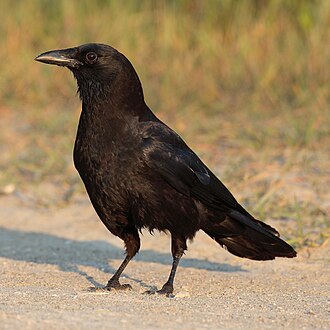 American crow
The American crow is a large passerine bird species of the family Corvidae.
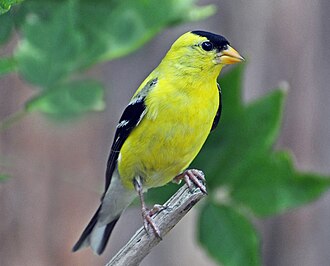 American goldfinch
The American goldfinch is a small North American bird in the finch family.
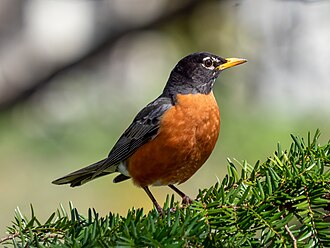 American robin
The American robin is a migratory bird of the true thrush genus and Turdidae, the wider thrush family.
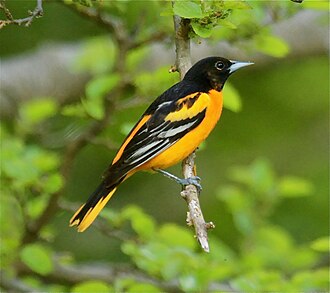 Baltimore oriole
The Baltimore oriole is a small icterid blackbird common in eastern North America as a migratory breeding bird.
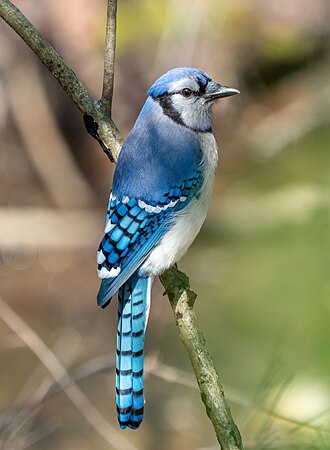 Blue jay
The blue jay is a passerine bird in the family Corvidae, native to eastern North America.
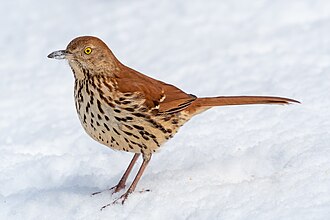 Brown thrasher
The brown thrasher, sometimes erroneously called the brown thrush or fox-coloured thrush, is a bird in the family Mimidae, which also includes the New World catbirds and mockingbirds.
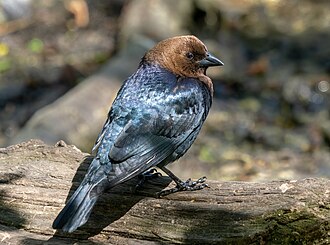 Brown-headed cowbird
The brown-headed cowbird is a small, obligate brood parasitic icterid native to temperate and subtropical North America.
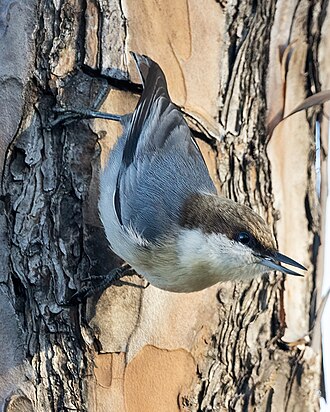 Brown-headed nuthatch
The brown-headed nuthatch is a small songbird endemic to pine forests throughout the Southeastern United States.
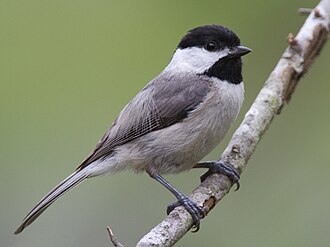 Carolina chickadee
The Carolina chickadee is a small passerine bird in the tit family Paridae.
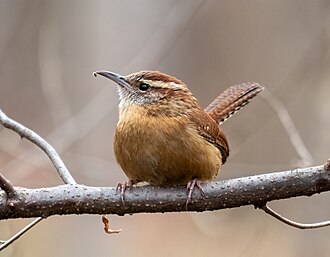 Carolina wren
The Carolina wren is a species of wren common in the eastern United States, the extreme south of Ontario, Canada, the northeast and southeast of Mexico, and into northern Central America.
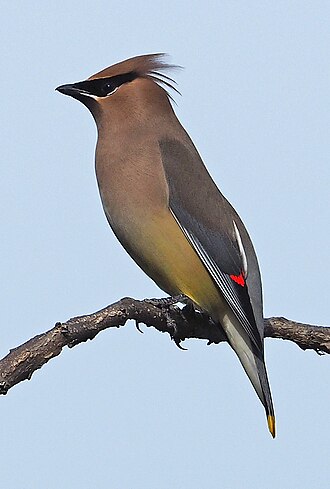 Cedar waxwing
The cedar waxwing is a member of the family Bombycillidae or waxwing family of passerine birds.
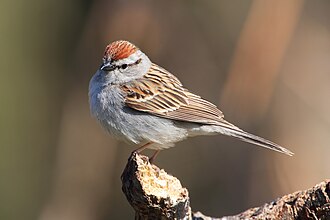 Chipping sparrow
The chipping sparrow is a species of New World sparrow, a passerine bird in the family Passerellidae.
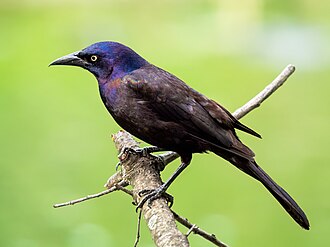 Common grackle
The common grackle is an icterid bird found in large numbers through much of North America.
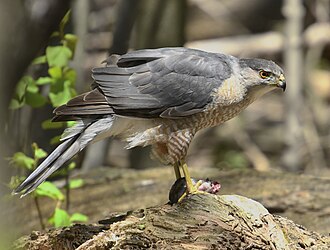 Cooper's hawk
 is a medium-sized hawk native to the North American continent and found from southern Canada to Mexico.
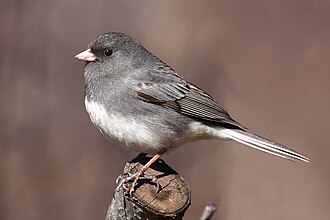 Dark-eyed junco
The dark-eyed junco is a species of junco, a group of small, grayish New World sparrows.
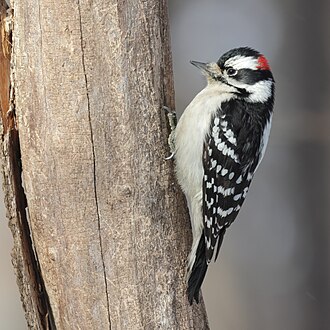 Downy woodpecker
The downy woodpecker is a species of woodpecker, the smallest in North America.
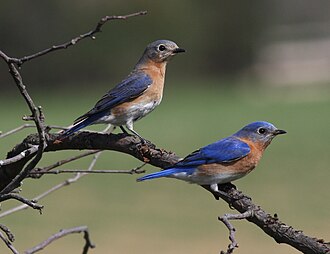 Eastern bluebird
The eastern bluebird is a small North American migratory thrush found in open woodlands, farmlands, and orchards.
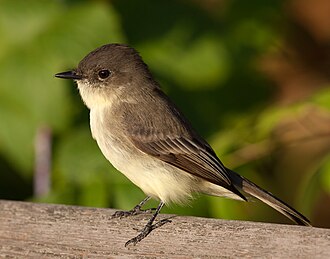 Eastern phoebe
The eastern phoebe is a small passerine bird.
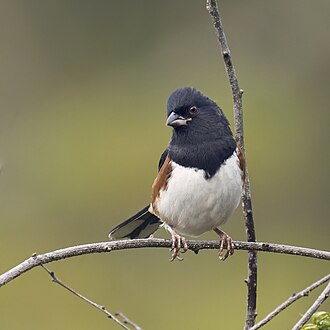 Eastern towhee
The eastern towhee, also known as chewink, joree, or joree bird, is a large New World sparrow.
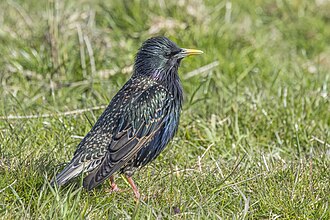 European starling
The common starling, also known simply as the starling in Great Britain and Ireland, and as the European starling in North America, is a medium-sized passerine bird in the starling family, Sturnidae.
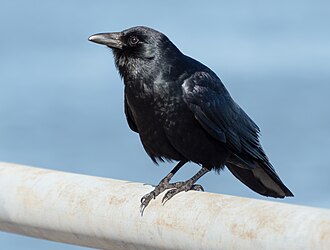 Fish crow
The fish crow is a species of crow associated with wetland habitats in the eastern and southeastern United States.
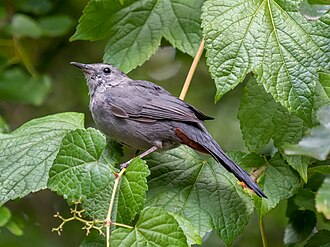 Gray catbird
The gray catbird, also spelled grey catbird, is a medium-sized North American and Central American perching bird of the mimid family.
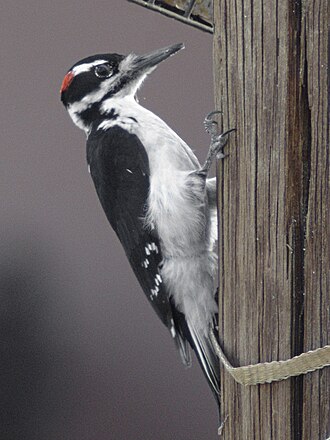 Hairy woodpecker
The hairy woodpecker is a medium-sized woodpecker that is found over a large area of North America.
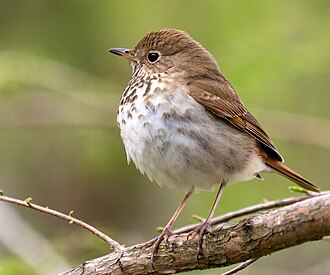 Hermit thrush
The hermit thrush is a medium-sized North American thrush.
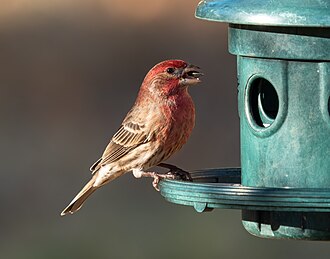 House finch
The house finch is a North American bird in the finch family.
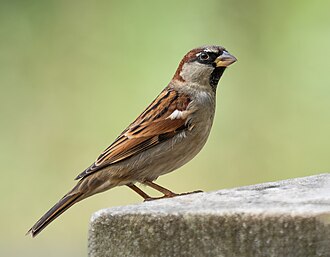 House sparrow
The house sparrow is a bird of the sparrow family Passeridae, found in most parts of the world.
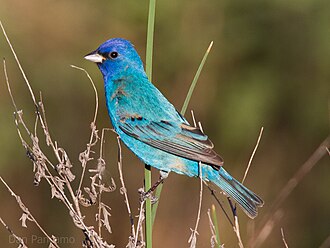 Indigo bunting
The indigo bunting is a small seed-eating bird in the cardinal family, Cardinalidae.
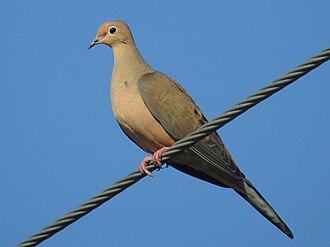 Mourning dove
The mourning dove is a member of the dove family, Columbidae.
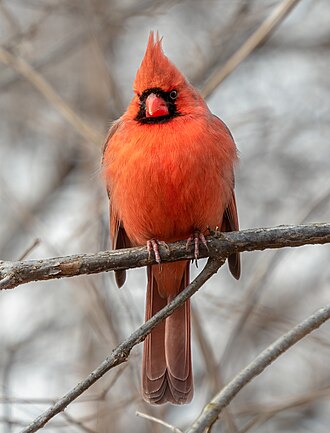 Northern cardinal
Year-round Chattahoochee songbird in the genus Cardinalis. Nigel Birdberry wears the male scarlet plumage and black face mask at the Canoe tray; Lady Birdberry visits in warm olive-tawny feathers with a coral bill and crimson crest.
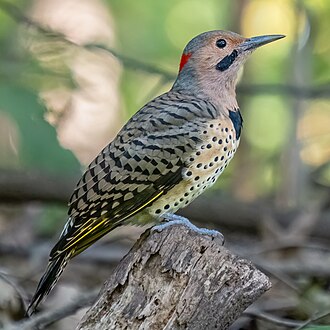 Northern flicker
The northern flicker or common flicker is a medium-sized bird of the woodpecker family.
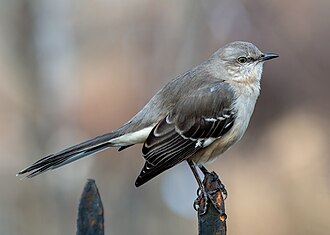 Northern mockingbird
The northern mockingbird is a mockingbird commonly found in North America, of the family Mimidae.
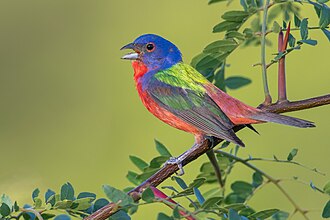 Painted bunting
The painted bunting is a species of bird in the cardinal family, Cardinalidae.
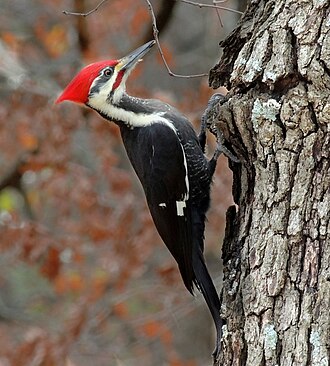 Pileated woodpecker
The pileated woodpecker is a large, crow-sized woodpecker with a prominent red crest, white neck stripe, and a mostly black body.
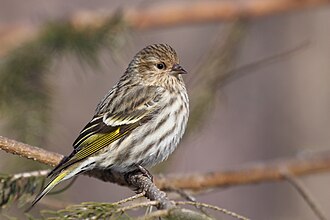 Pine siskin
The pine siskin is a North American bird in the finch family.
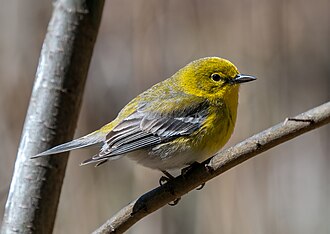 Pine warbler
The pine warbler is a small songbird of the New World warbler family Parulidae.
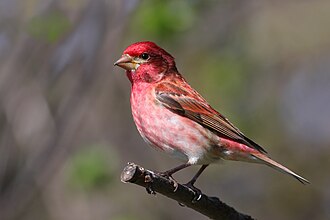 Purple finch
The purple finch is a bird in the finch family, Fringillidae.
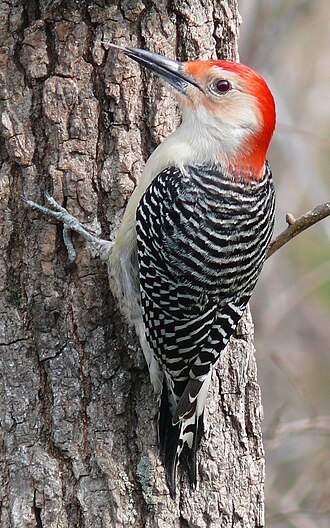 Red-bellied woodpecker
The red-bellied woodpecker is a medium-sized woodpecker of the family Picidae.
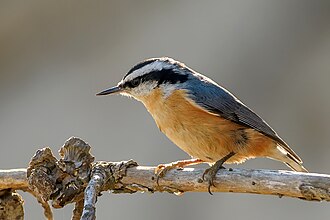 Red-breasted nuthatch
The red-breasted nuthatch is a small songbird.
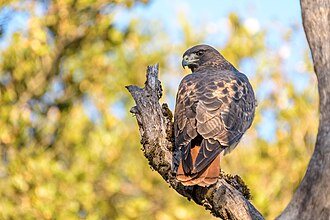 Red-tailed hawk
The red-tailed hawk is a bird of prey and one of the most common hawks in North America.
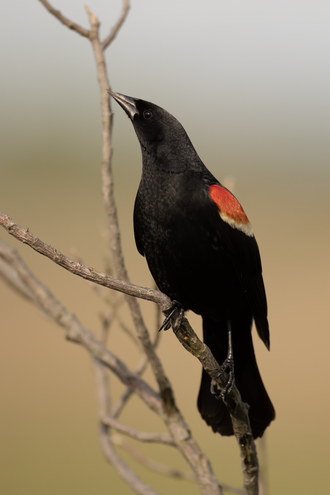 Red-winged blackbird
The red-winged blackbird is a passerine bird of the family Icteridae found in most of North America and much of Central America.
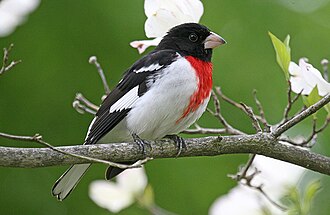 Rose-breasted grosbeak
The rose-breasted grosbeak, colloquially called "cut-throat" due to its coloration, is a large, seed-eating grosbeak in the cardinal family (Cardinalidae).
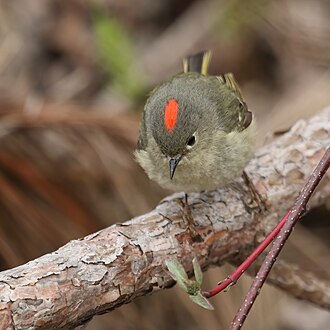 Ruby-crowned kinglet
The ruby-crowned kinglet is a very small passerine bird found throughout North America.
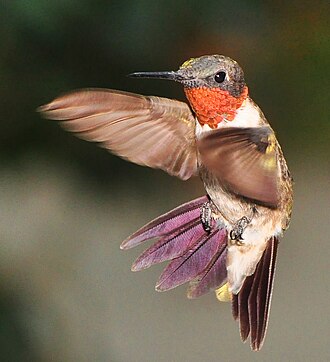 Ruby-throated hummingbird
The ruby-throated hummingbird is a species of hummingbird that generally spends the winter in Central America, Mexico, and Florida, and migrates to Canada and other parts of Eastern North America for the summer to breed.
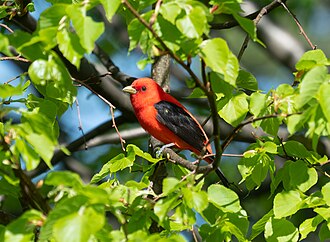 Scarlet tanager
The scarlet tanager is a medium-sized American songbird.
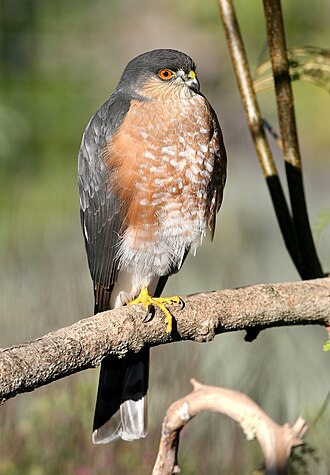 Sharp-shinned hawk
The sharp-shinned hawk or northern sharp-shinned hawk, colloquially often nicknamed sharpie, is a small hawk, with males being the smallest hawks in the United States and Canada, but with the species averaging larger than some Neotropical species, such as the tiny hawk.
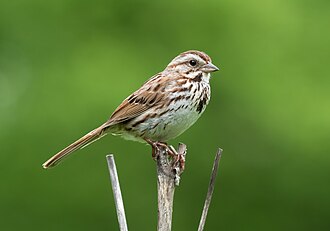 Song sparrow
The song sparrow is a medium-sized New World sparrow.
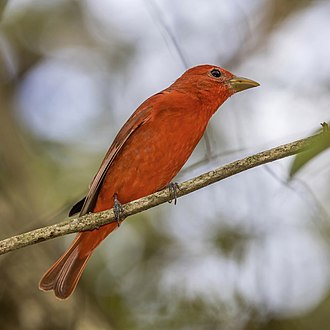 Summer tanager
The summer tanager is a medium-sized American songbird.
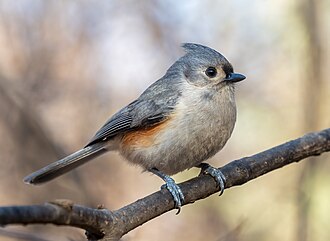 Tufted titmouse
The tufted titmouse is a small songbird native to eastern North America.
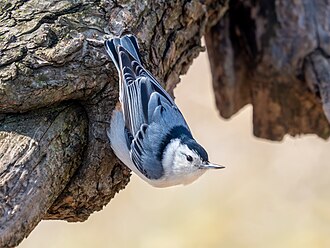 White-breasted nuthatch
The white-breasted nuthatch is a species of bird in the nuthatch family Sittidae.
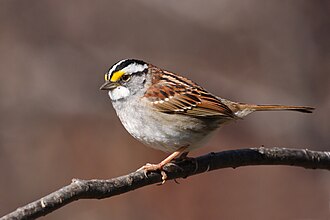 White-throated sparrow
The white-throated sparrow is a passerine bird of the New World sparrow family Passerellidae.
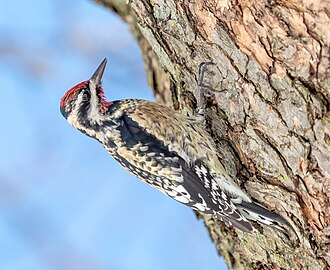 Yellow-bellied sapsucker
The yellow-bellied sapsucker is a medium-sized woodpecker that breeds in Canada and the northeastern United States.
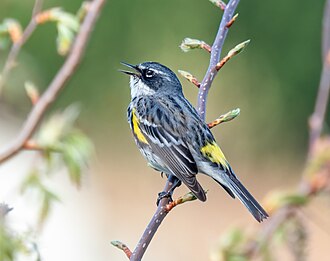 Yellow-rumped warbler
The yellow-rumped warbler is a North American bird species that can be commonly observed all across the continent.